Osaka, Japan
2022
Amber Sanctuary Residence
A contemplative residence that fuses brutalist structural language with Japanese spatial philosophy.
project details
Where Stone Breathes Light
CATEGORY
Residential
LOCATION
Osaka, Japan
SCOPE
Architecture design, Spatial Sequence
SIZE
5501 m2
YEAR
2022
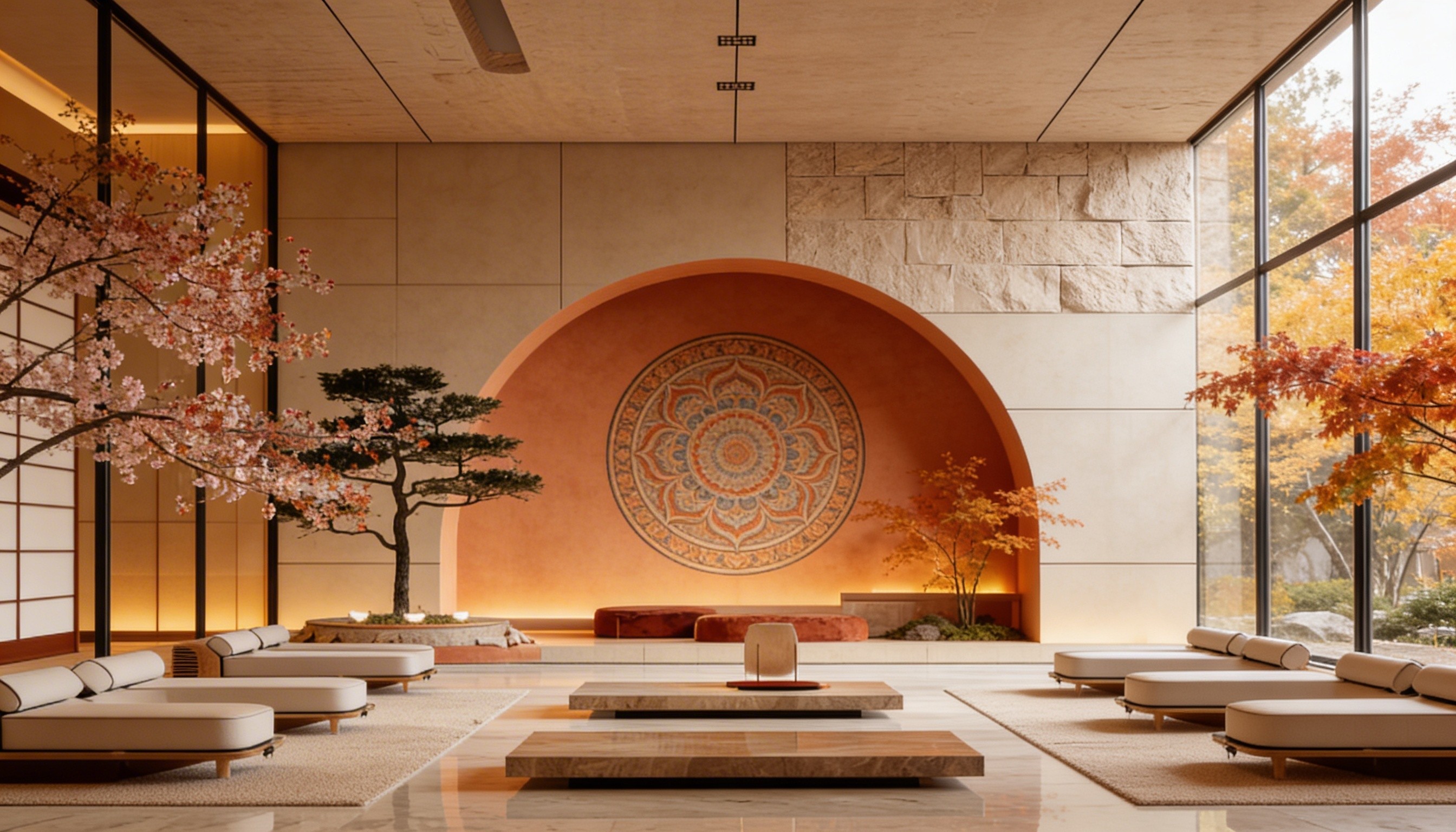
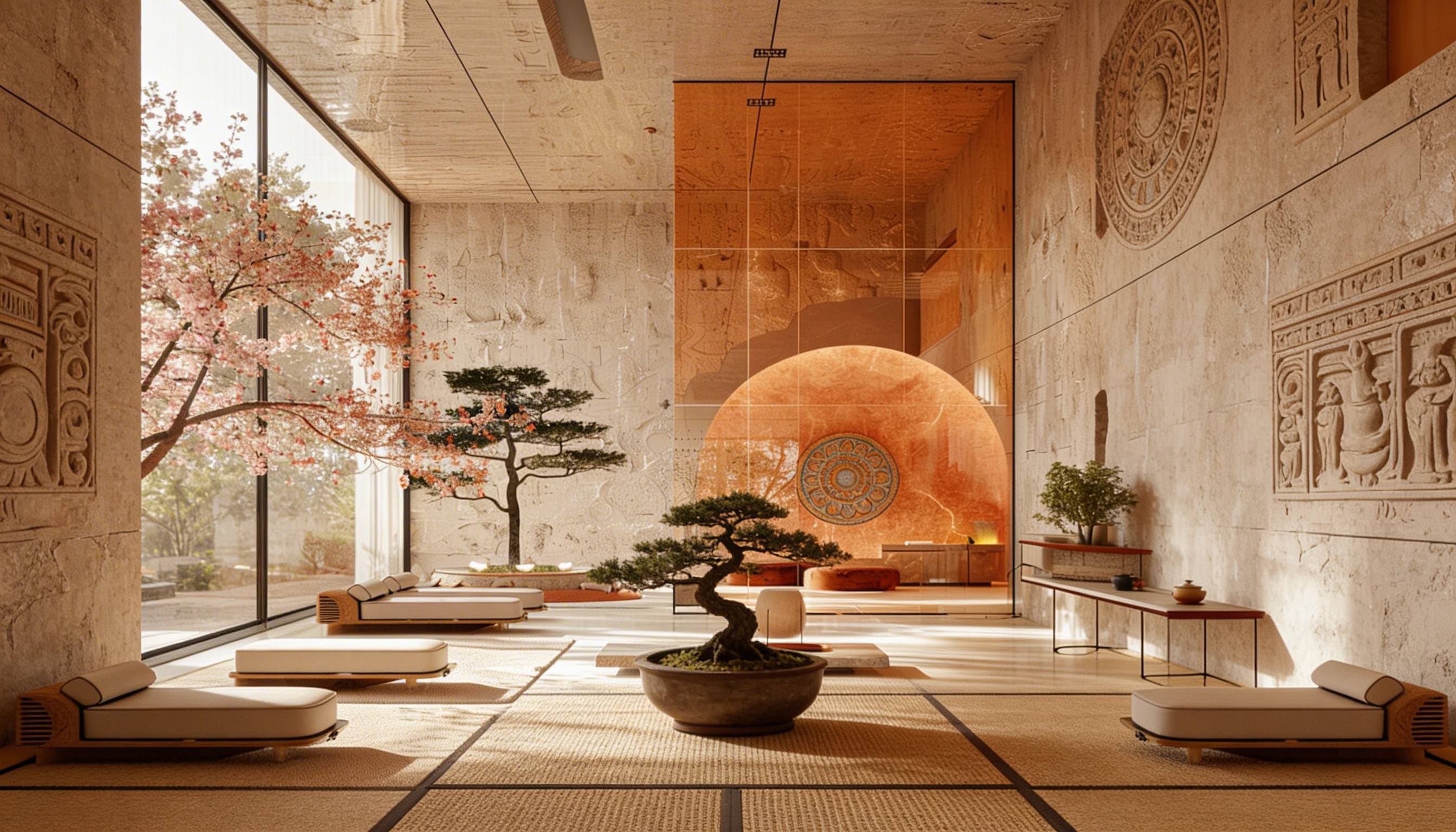
A contemplative residence that fuses brutalist structural language with Japanese spatial philosophy. The project centers around a sculptural amber-lit archway that serves as both architectural focal point and meditation space.
The design explores the intersection of weight and lightness—massive travertine walls grounding the structure while an illuminated arch creates an ethereal, almost floating presence. The arch functions as a spatial hinge, organizing circulation and views while providing a ceremonial backdrop for daily rituals.
The floor plan follows traditional Japanese ma (negative space) principles, but expressed through contemporary material vocabulary. Rather than shoji screens and tatami, we used raw concrete, carved stone, and backlit onyx to create layers of transparency and enclosure.
Board-formed concrete (structural walls and ceilings)
Travertine with hand-carved relief patterns (feature walls)
Backlit amber onyx (illuminated arch element)
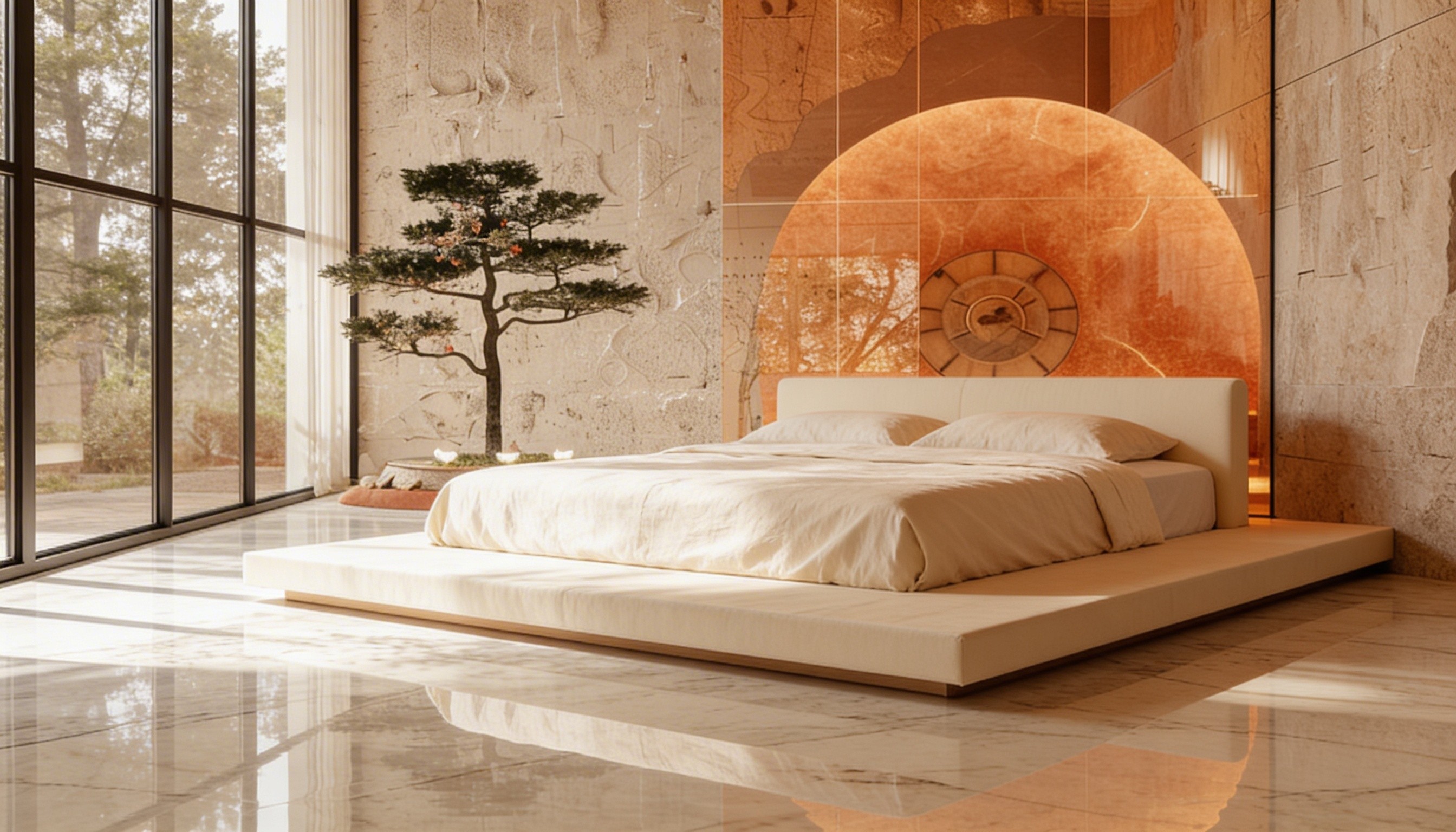
Ipe wood (platform bed base and accent surfaces)
Polished concrete with aggregate (flooring)
Steel-framed glass (floor-to-ceiling windows)
The amber arch is the technical and aesthetic centerpiece—a 3.5-meter-tall curved element composed of 40mm thick honey onyx panels with integrated LED backlighting. The stone's natural translucency creates a warm, diffused glow that shifts in intensity throughout the day via automated dimming systems.
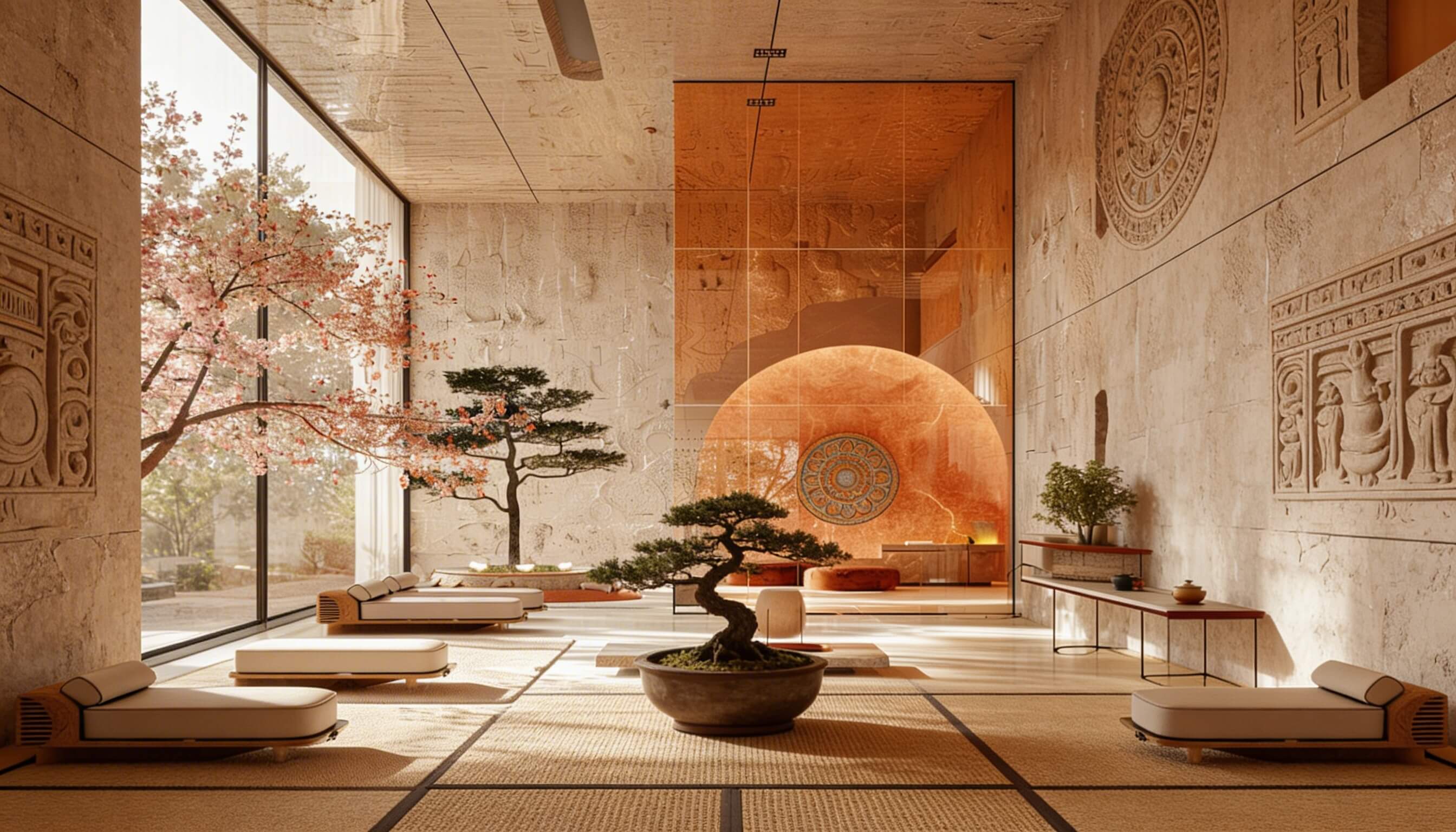
The travertine walls feature shallow relief carvings—abstract patterns inspired by traditional Japanese textile motifs. These were hand-carved by local stone artisans over four months, creating subtle texture that catches and reflects the amber light at different angles.
The bedroom platform is a minimalist reinterpretation of traditional Japanese floor sleeping—a low Ipe wood base that appears to float above the polished concrete floor through hidden structural support. No bed frame, no headboard—just a continuous horizontal plane that emphasizes the room's meditation-like quality.
Floor-to-ceiling steel-framed windows blur the boundary between interior and exterior. The frames are detailed at an unusually thin 25mm profile, making the glass appear frameless from certain angles. Views open onto a carefully curated Japanese garden with mature bonsai specimens positioned as living sculptures.
The integration of bonsai trees within the interior space—typically reserved for exterior gardens—required custom climate control systems maintaining precise humidity and temperature. Automated shading protects the trees from excessive direct sunlight while preserving views.
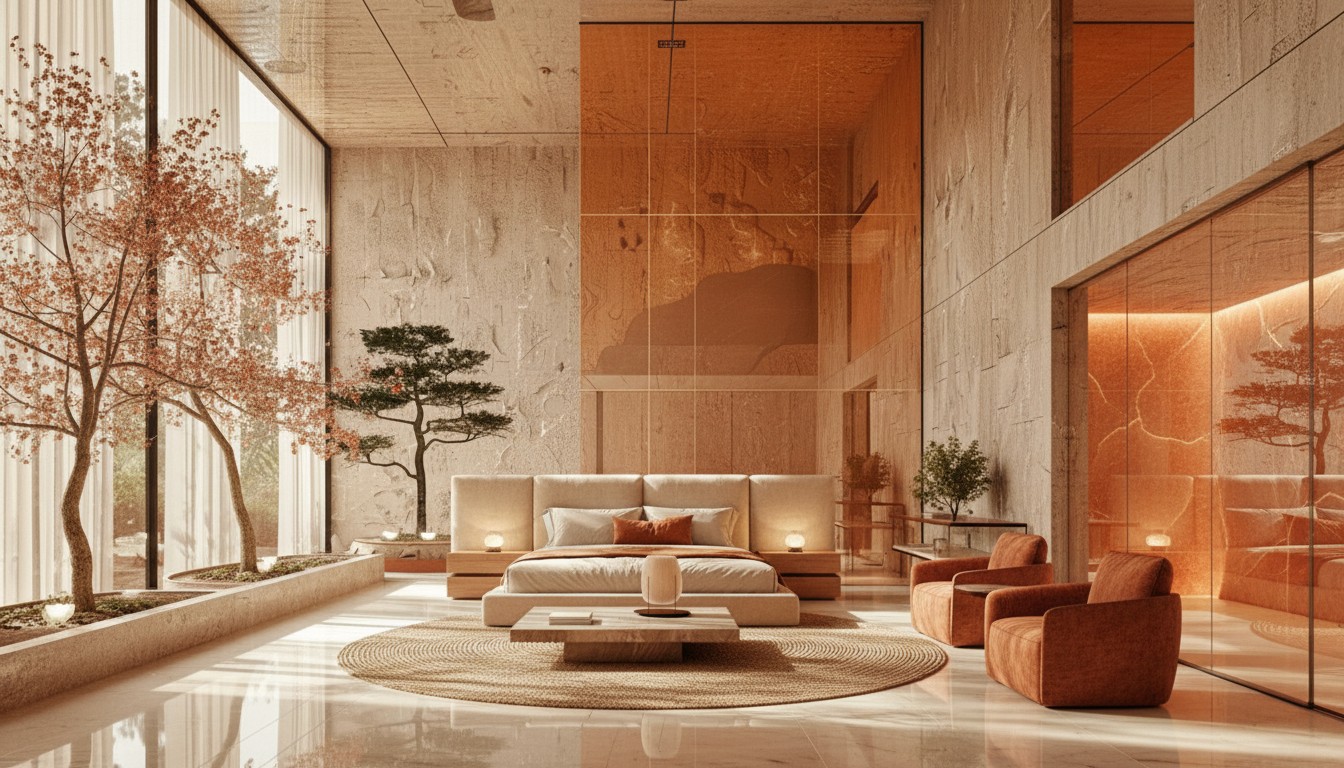
Entry occurs through a compressed corridor that intentionally blocks views of the main space. Upon turning the corner, the full volume reveals itself—double-height ceilings, the glowing amber arch, and garden views beyond. This compression-and-release sequence amplifies the impact of the primary living area.
The dining zone occupies a mezzanine level, creating visual connection to the main space while maintaining functional separation. Circulation flows around the amber arch, which acts as a spatial organizing element—all movement orbits this luminous core.
Let’s Talk
Start with a Conversation
Every space begins with a clear idea. Let’s define it together.